
Battery Maintenance & Care
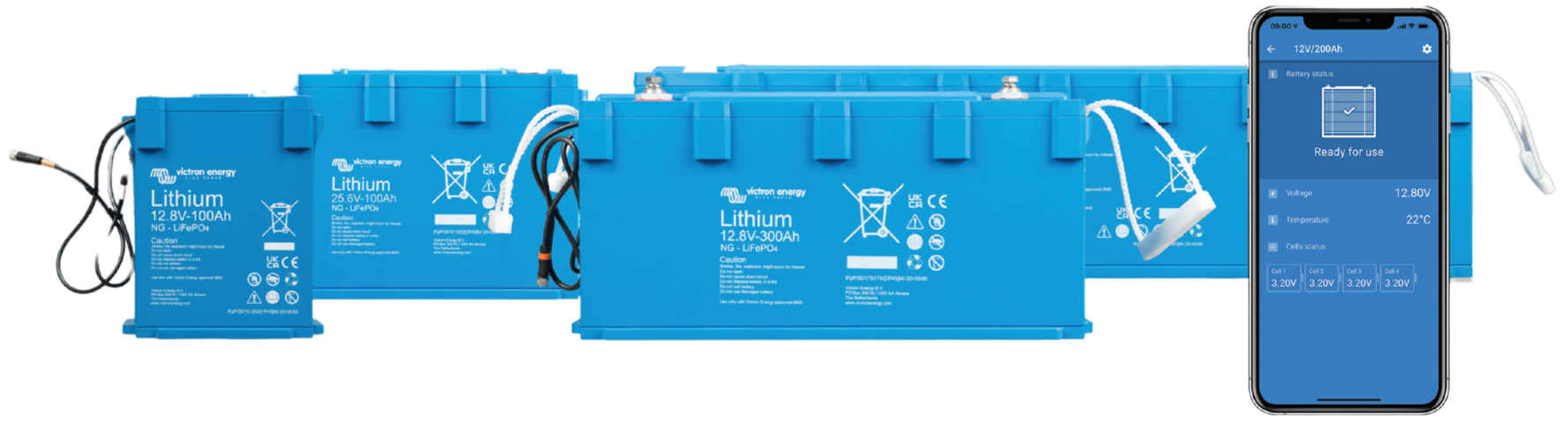
How to extend your battery lifespan and avoid breakdown
Basic marine battery care is simple, by keeping your batteries at optimal charge through smart charging, solar power, and active monitoring, you will extend their service life and ensure your vessel is always ready for action.
Understanding Battery Voltage
Most marine batteries are rated at 12 volts, but reading 12.0V on a multimeter does not mean it is fully charged— it means the battery is flat.
12.6V – 12.8V: Fully charged and healthy.
12.1V – 12.4V: Discharged. Permanent sulfation damage is actively occurring.
12.0V or lower: Severely discharged. Significant capacity loss and risk reduction of battery lifespan.
Keeping Batteries at Optimal Charge
Batteries naturally self-discharge over time when left sitting idle. To prevent damage, keep your battery topped up and monitored using the right setup,
Multi-Stage Smart Chargers: Plug into 240V mains power or shore power after every trip. A multi-stage smart charger safely brings the battery back to peak capacity and automatically drops into a "float" or maintenance mode to prevent overcharging.
Solar Power Solutions: If shore power isn't available, solar is an ideal way to maintain an optimal charge. A permanent solar panel or a portable solar kit paired with an MPPT will continuously counteract parasitic draw (like bilge pumps or stereo memory) and keep your battery topped up.
Smart Battery Monitors: Consider installing a Bluetooth or smart battery monitor. These devices track real-time voltage and state-of-charge directly on your smartphone, sending instant alerts if your batteries begin dropping their charge so you have time to intervene before it goes flat.
Battery Management System, either automatic or manual is recommended to prevent multiple charging sources operating at the same time.
Routine Care
Clean the Terminals: Remove white or blue corrosion using a solution of baking soda and water (or boiling water). Dry thoroughly and coat with petroleum jelly or terminal protectant.
Tighten Fittings: Ensure terminal nuts and cable connections are tight to prevent severe voltage drops under load.
Check Fluid Levels: For flooded (non-sealed) batteries, inspect electrolyte levels monthly and top up with distilled water after fully charging.
Secure Batteries: Ensure the battery tray and tie-downs are secure to prevent internal vibration damage in rough water.
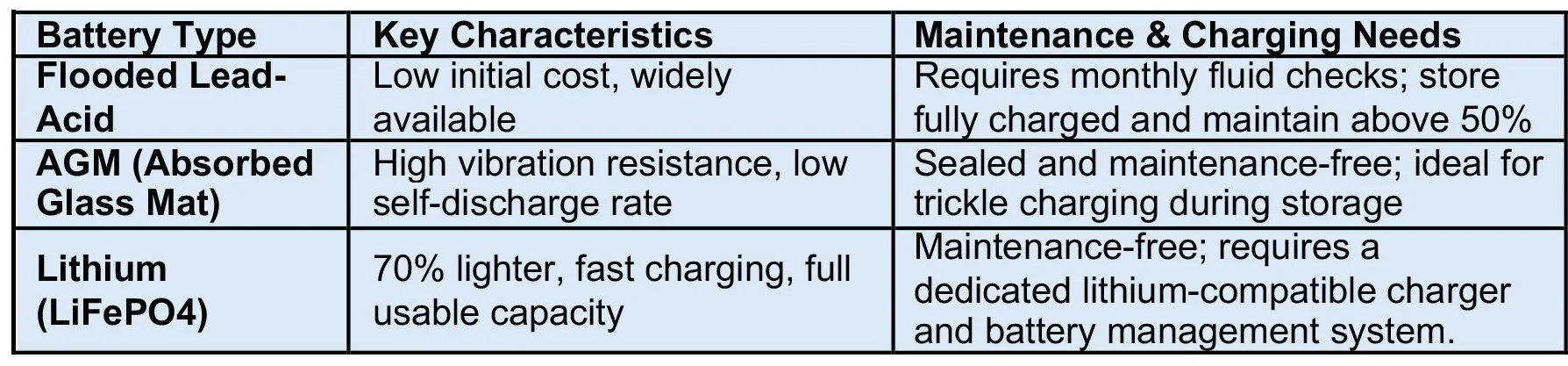
Table: Battery types and maintenance.
Charging Protocols by Storage Setup
Marina Berth or Mooring
Isolate Non-Essential Loads: Turn the main battery selector switch OFF to eliminate parasitic power drains. Ensure your automatic bilge pump is wired to an unswitched 24-hour supply from the’House Bank’, keeping it live at all times without risking your engine start battery.
Maintain Float Charge Safely: Use a multi-stage shore power charger paired with a galvanic isolator, or install a dedicated solar setup with an MPPT controller to continuously counteract bilge pump standby draw.
Install Smart Monitoring for Batteries and Bilge Pumps: Connect a smart monitor (like a Victron GlobalLink) to your bilge circuit and batteries. You’ll receive immediate alerts on your phone if the pump triggers or runs excessively, allowing you to catch leaks before severe battery drain occurs.
Trailer Boats & Off-Season Storage
Disconnect the negative terminal or switch off the master isolator to stop parasitic power drain.
Connect a smart bench charger after every trip. If 240V power isn't handy, set up a portable solar panel in a sunny spot to keep the battery topped up.
Store removed batteries off bare concrete floors in a cool, dry place.
Drystack Storage (No Mains Power Access)
Option A: Remove the battery using quick-disconnect terminals and store it on a smart charger at home.
Option B: Turn the master isolation switch completely OFF. If your rack gets direct sunlight, talk to us about setting up a portable solar kit.
Battery Upgrade: Switching to AGM or Lithium is ideal for drystacking, as they lose less than 3% charge per month when isolated (compared to 10–15% for flooded batteries).
Solar and Shore Power Verification
Solar: Keep panel surfaces clear of salt spray and grime. Verify the charge controller settings match your battery chemistry (Flooded, AGM, or Lithium) and check the display to confirm active charging current.
Shore Power: Always use a multi-stage marine smart charger.
Battery compartments must be ventilated and batteries should not be exposed to heat, such as in an engine room.
Turn off heavy DC loads so the charger reads true voltage.
If you have any questions or concerns, please call the team at HMB Marine Electrical, we are here to help.